Standard. Full detail. Turn on any support you need, they layer together.
Live example: these are the full standard words. Turn on Ease or Soothe, and this line itself becomes simpler.
Standard. Full detail. Turn on any support you need, they layer together.
Live example: these are the full standard words. Turn on Ease or Soothe, and this line itself becomes simpler.
How gangs try to recruit you
How gangs try to recruit you
How gangs recruit you
Gangs & recruitment
This is about how gangs and criminal groups try to get hold of young people — and how to spot it before you're trapped. It is not your fault if this is happening to you. The people who do this are good at it. They copy the way businesses recruit, and they use your loneliness, your money worries, or your need to belong. You are a victim of crime, not a criminal. Knowing the tricks helps you stay free.
This is about how gangs try to get hold of young people — and how to spot it early. It is not your fault. The people who do this are good at it. They use loneliness, money worries, or the need to belong. You are a victim of crime, not a criminal.
How gangs try to get hold of young people — and how to spot it early. Not your fault. They use loneliness, money worries, the need to belong. You are a victim of crime, not a criminal.
How gangs target young people. Spot it early. Not your fault. You are a victim of crime, not a criminal.
At a glance
- How gangs pick young people, and the four stages they use to trap them. Tap each stage to read it.
- It is not your fault. You are a victim of crime, not a criminal.
- You can get help without telling your family. Every route on this page works without them.
- In danger right now: call 999. Childline is 0800 1111, free, any time.
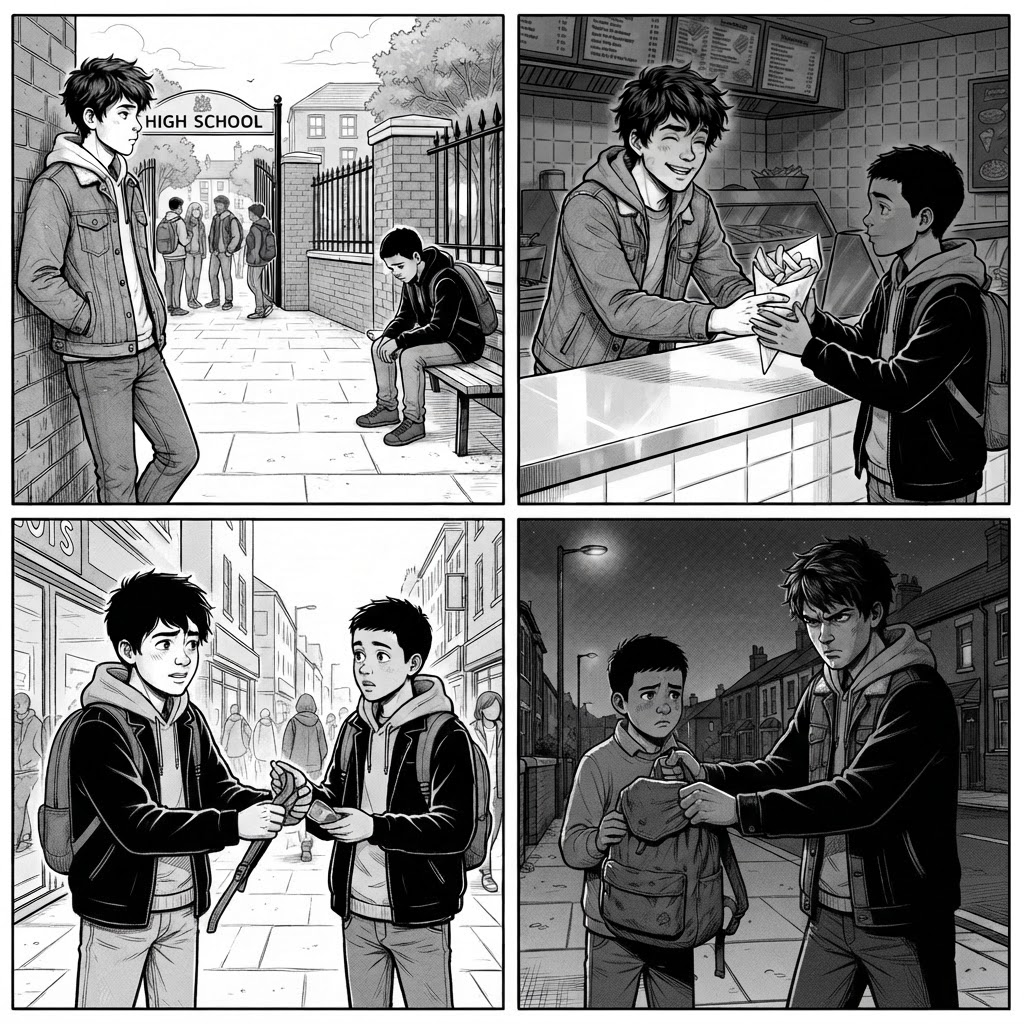
Real friendship doesn't keep a list of what you owe.Real friendship doesn't keep a list of what you owe.Real friendship doesn't keep a list of what you owe.Real friendship doesn't keep score.
What if you can't tell your family?
What if you can't tell your family?
Can't tell your family?
Can't tell family?
Not everyone can tell their family — and that's more common than people think. Maybe the adults in your life are always working, or caught up in their own struggles, so there's no one steady to turn to. Maybe home doesn't feel like a place where you can be honest. Maybe you're not in touch with your family at all right now. Or maybe someone has warned you not to tell — “we know where you live, we know who you love.” That's a threat, and it actually means they're worried you'll reach for help. That's your sign to reach. You can get help without your family, and you never have to tell them.
Not everyone can tell their family — that's more common than people think. Maybe the adults around you are always working, or caught up in their own struggles. Maybe home isn't a place you can be honest. Maybe you're not in touch with family at all. Or someone has warned you not to tell — “we know where you live, we know who you love.” That's a threat. It means they're worried you'll get help. That's your sign. You can get help without your family, and you never have to tell them.
Not everyone can tell their family — that's common. Maybe the adults around you are always working, or caught up in their own stuff. Maybe home isn't a place you can be honest. Maybe you're not in touch with family right now. Or someone warned you not to tell — “we know where you live, we know who you love.” That's a threat. It means they're worried you'll get help. That's your sign. You can get help without your family, and you never have to tell them.
Not everyone can tell their family. Maybe they're always working, or home isn't safe to be honest, or you don't have family right now. Or someone warned you not to tell. That's a threat — it means they're scared you'll get help. You can get help without them. You never have to tell them.
Childline 0800 1111
Free, 24/7, confidential. You don't have to give your name.
Free, 24/7, confidential. No name needed.
Free, 24/7, confidential. No name needed.
Free, 24/7. No name needed.
Call 0800 1111CEOP report
Report online at report.ceop.police.uk. You don't have to talk to anyone. This is the police team for online child exploitation.
Report online. No phone call. The police team for online exploitation.
Report online. No phone call. Police team for online exploitation.
Report online. No phone call.
Go to reportA trusted adult at school
Your form tutor, any teacher you like, or the safeguarding lead (the DSL). It is literally their job to help you. You don't need your family to go to them.
Your form tutor, any teacher, or the safeguarding lead. It's their job to help. No family needed.
A teacher or the safeguarding lead. Their job to help. No family needed.
A teacher or safeguarding lead. Their job to help.
Missing People (Runaway Helpline) 116 000
Free, 24/7. If you've gone missing or run away, or you're thinking about it. They help you, not get you in trouble.
Free, 24/7. If you've run away or are thinking about it. They help, not punish.
Free, 24/7. If you've run away or might. They help, not punish.
Free, 24/7. If you've run away.
Call 116 000The four stages they use
The four stages they use
The four stages
The four stages
Tap a stage to read it. Tap again to close it.
Tap a stage to read it.
Tap a stage to read it.
Tap to read more.
The threats they use
The threats they use
The threats they use
Threats they use
These are threats. Every one of them is a crime — and you are the victim, not the person in trouble. A threat like this means they are scared you'll get help. That's your sign to get it.
These are threats. Every one is a crime — you are the victim. A threat means they're scared you'll get help. That's your sign to get it.
These are threats. Each is a crime — you are the victim. A threat means they're scared you'll get help. That's your sign to get it.
These are threats. Each is a crime. You are the victim. A threat means they're scared you'll get help.
“We know where you live.”
“We know where you live.”
“We know where you live.”
“We know where you live.”
“We know how much you love your gran — or your little brother, or your dog.”
“We know how much you love your gran — or your little brother, or your dog.”
“We know how much you love your gran — or your little brother, or your dog.”
“We know who you love.”
“If you tell anyone, your family gets it.”
“If you tell anyone, your family gets it.”
“If you tell anyone, your family gets it.”
“Tell anyone and your family gets it.”
“You owe us. You can't leave.”
“You owe us. You can't leave.”
“You owe us. You can't leave.”
“You owe us. You can't leave.”
“We've got photos of you. If you leave, we'll send them.”
“We've got photos of you. If you leave, we'll send them.”
“We've got photos of you. If you leave, we'll send them.”
“We've got photos. Leave and we send them.”
Words gangs use
Words gangs use
Words gangs use
Gang words
These words can be innocent in one chat and a sign of trouble in another. Never judge one word alone — read it with everything else going on.
These words can be innocent or a sign of trouble. Never judge one word alone.
These words can be innocent or a sign of trouble. Never judge one word alone.
These words can be innocent or a sign of trouble. Don't judge one word alone.
If this is happening to you, you are not in trouble. You are a victim of crime. The people doing this are the ones in the wrong. Telling someone is not snitching — it's getting yourself safe.
You are not in trouble. You are a victim of crime. The people doing this are in the wrong. Telling someone is not snitching — it's getting safe.
You are not in trouble. You are a victim of crime. Telling someone is not snitching — it's getting safe.
You are not in trouble. You are a victim. Telling someone is getting safe.